For decades, keeping savings in a bank account has felt like the responsible choice - safe, predictable, simple. But in a time of rapid innovation and shifting economic power, is “safe” enough?
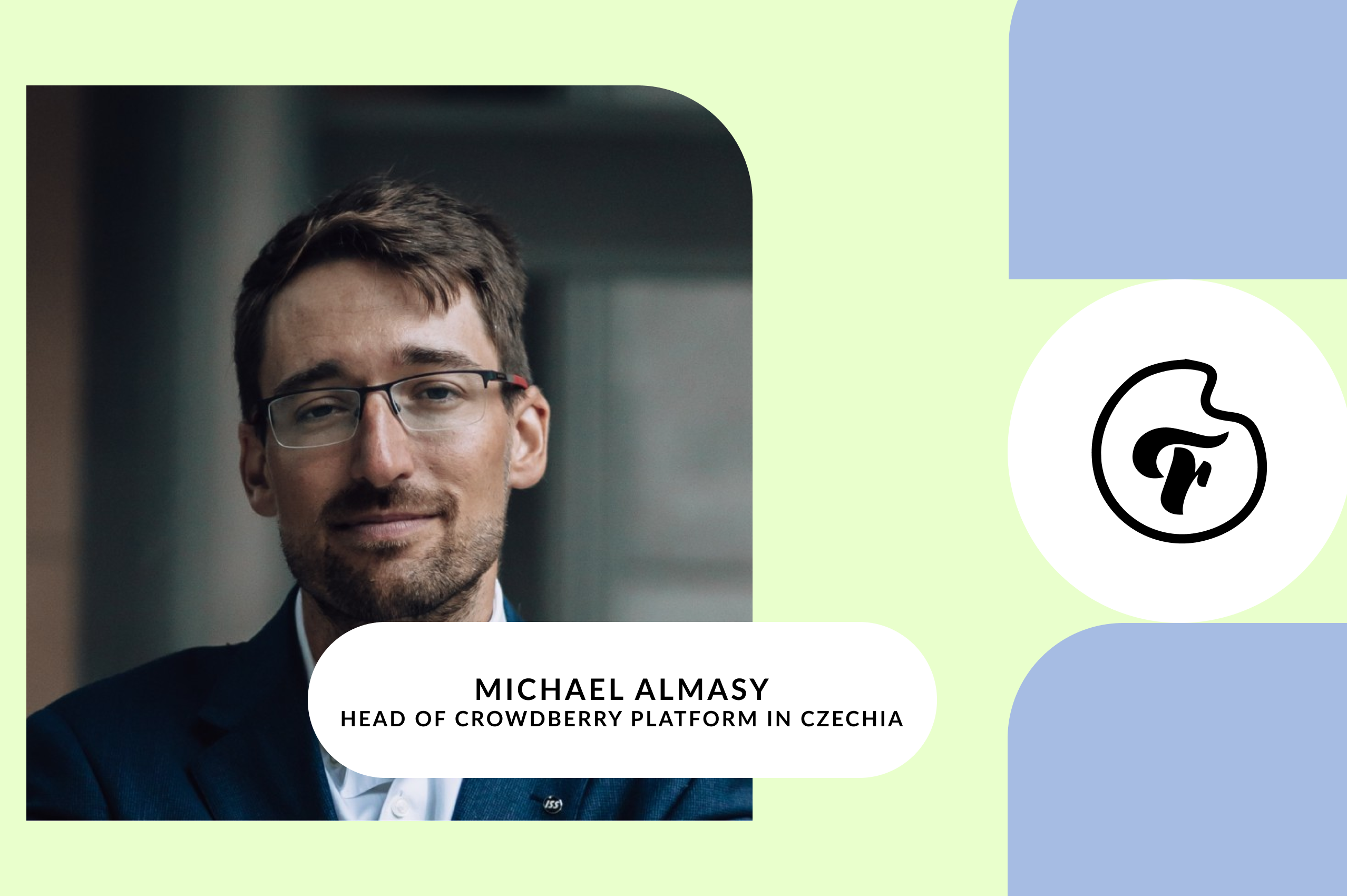
In this interview, Michael Almašy, Head of Crowdberry platform in Czechia, challenges the traditional saver mindset and makes a compelling case for direct investing as a tool not only for personal wealth creation, but for strengthening local economies across Central Europe. From mobilizing “lazy capital” to funding the next generation of scale-ups, he explains why even €1,000 can be a meaningful building block in Europe’s innovation story.
We spoke about risk, resilience, regional growth, and the mindset shift required to move from being a passive consumer of financial products to becoming an active owner in the future you want to see.
Keeping savings in a bank often comes from a traditional sense of security, but in reality, it’s a bit of a missed opportunity. If you’ve worked hard to earn your capital, leaving it in a basic deposit account effectively means you're letting the bank keep the majority of the profit your money could be generating. I don't see direct investing just as an alternative; for me, it’s about taking ownership of your financial future instead of outsourcing the benefits to a middleman.
For a long time, the "investment game" felt like a closed club for big institutions. Today, those barriers are falling. While €1,000 might seem small on its own, the logic of growth is the same whether you invest a thousand or a million. In the EU, billions of euros are sitting "stagnant" in bank accounts. If we mobilized even a fraction of this "lazy capital," we wouldn't just be building personal wealth - we would be fully funding the next generation of European innovation. Your €1,000 is a vital brick in the foundation of a stronger economy.
We focus on what we call the "sweet spot." We don’t ask our investors to take on the "all-or-nothing" risk of very early startups; that’s usually a job for angel investors. Instead, we look for scale-ups - established local companies with proven products that need capital to grow further. These are businesses you can often see and touch in your own region. They are past the risky experimental stage but still have huge growth potential, which is where your capital can drive the most impact and earn a solid return.
The first step is moving from "trusting an ad" to trusting a process. Treat your first investment like a job interview for the platform you’re using. Ask three simple questions: What is their vetting process? What is their track record? And is the potential reward realistic compared to the risk? A common mistake is confusing a risky loan with a "safe" savings alternative. Confidence comes from understanding what you are actually buying - knowing the difference between a secured asset and a simple promise.
People often think the public stock market is safer because it’s big, but it’s actually very volatile because it reacts to every headline. When you invest directly, you aren't just a spectator watching numbers on a screen; you are a stakeholder in a real business. While savings offer "safety" at the cost of zero growth, and public markets offer "liquidity" at the cost of high volatility, direct investing offers purpose. You know exactly where your money is and exactly what it is building.
These stories prove that the center of gravity in Europe is shifting. We need to stop seeing Central Europe as a "secondary" market. Our region is no longer just an outsourcing hub; we are becoming an innovation powerhouse. We see incredible hunger and energy here that some Western markets are starting to lose. Investing in companies like GymBeam is essentially betting on the new economic engine of the entire continent - and the data shows it’s a very smart bet.
I see direct investing as a way of taking care of our "home." Every time a great local company has to go abroad to find funding, we lose talent and future opportunities. When you invest locally, you start a positive chain reaction: these companies create high-value jobs, those employees spend their money locally, and the whole community rises. It’s about deciding what kind of world we want to build for the next generation - one where they have the best opportunities right here at home.
In the long run, it’s about resilience. Right now, Europe is very dependent on foreign technology and energy. By putting our savings into local innovation, we aren't just looking for a return; we are building strategic independence. Every innovative local company we support is a step toward a continent that can stand on its own two feet and defend its interests in a competitive world. Innovation is truly our best defense against becoming irrelevant.
The biggest shift is moving from being a "consumer" to being an "owner." Many people are caught in a cycle of working jobs just to pay off debts or buy things. Moving from a "saver" to an "investor" means realizing that your capital can be your path to freedom. It’s the most powerful tool we have to break the cycle. It allows you to move from "working for money" to having your money work for the future you actually want to see.
My advice is: align your capital with your values, but protect it with expertise. Follow your heart regarding the impact you want to make, but follow the experts when it comes to the technical execution. You wouldn't perform surgery on yourself, and the same goes for complex investments - find a partner with a proven track record. Finally, never stop learning. Financial education is the ultimate investment; the more you understand, the better you can shape the world through your choices.