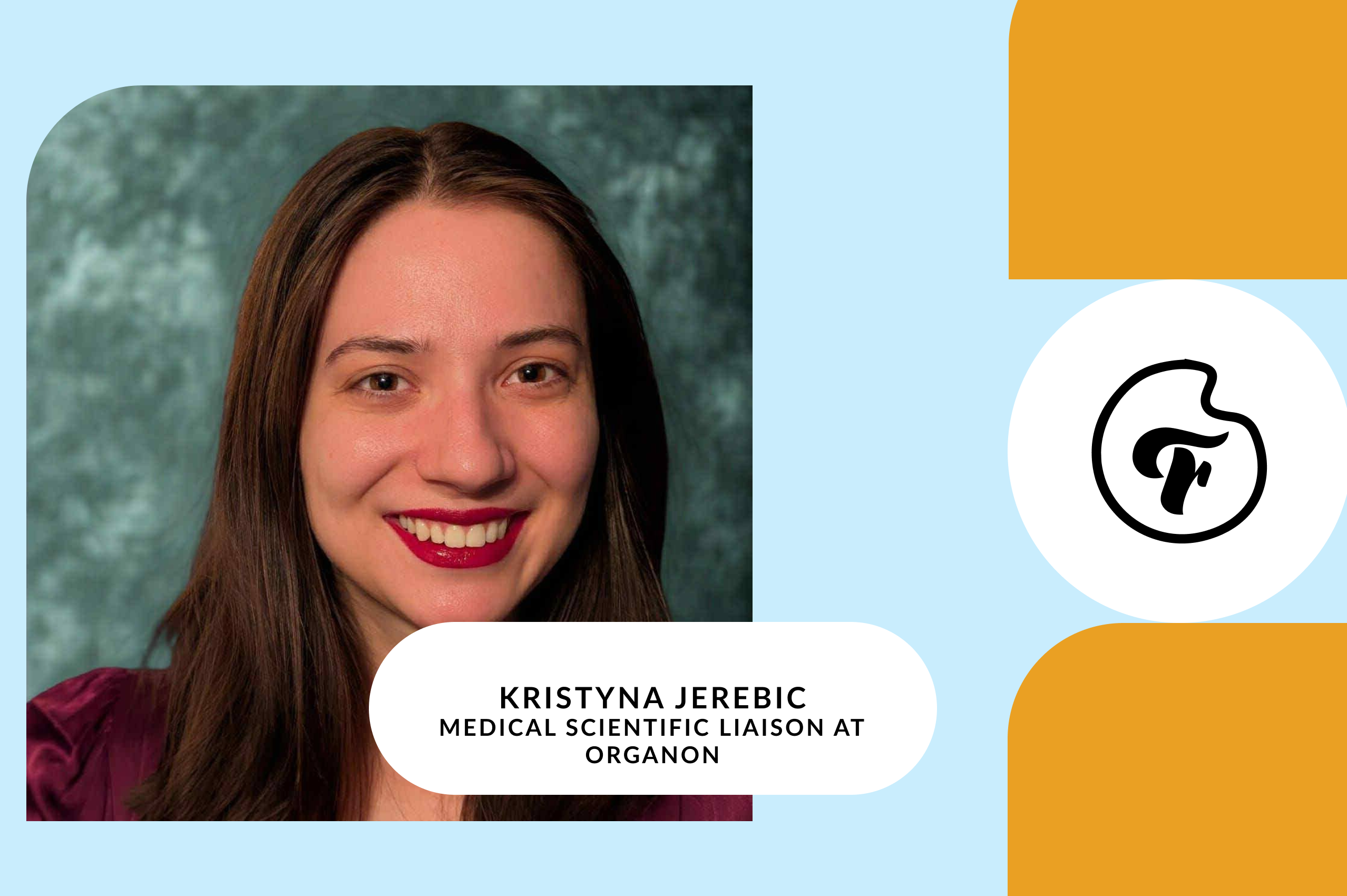
Kristýna Jerebic serves at Organon as a Medical Scientific Liaison, where she focuses on the development and implementation of medical plans in the areas of women's health and migraine treatment. Her work is closely connected not only with her professional role but also with her personal passion for science and factual communication. In 2025, she helped her colleagues launch the successful project "Plodnost pod kontrolou" aimed at raising awareness of women's fertility. The goal of the project is to support women in making informed decisions about their future and family planning, with social freezing offering a modern solution for preserving freedom of choice. For Kristýna, this project is a heartfelt matter, as she herself decided to freeze her eggs in 2024 and went through the entire process firsthand. Now, through the project, she can help enlighten young women to ensure they have access to adequate, correct and scientifically verified information for making informed decisions.
I remember reading an article about egg freezing at the start of my university studies and the concept immediately resonated with me. I made a mental note to pursue it once I had financial means. Following university, my focus shifted away from this topic due to being in a stable relationship, yet I continued to keep that mental note in mind. As my income increased, the idea resurfaced, prompting me to seek initial consultations. However, finding the time proved challenging. What really moved me was reviewing real patient cases from a renowned reproductive medicine specialist who specializes in oncofertility. One particular case stood out: a woman froze embryos with her partner of five years, and after their breakup 11 years into the relationship, she discovered she had cancer at over 40 years of age, leaving her with no partner, frozen eggs, or embryos. She had to freeze her 40-year-old eggs anew, knowing younger eggs have better chances for a healthy pregnancy. This led to extensive discussions in our home about whether to freeze embryos jointly or to focus solely on my eggs. Ultimately, I chose to have complete control over my eggs and opted for social freezing of oocytes.
My education in pharmacy made me aware of this option, but my current role in the pharmaceutical industry, in a company which focuses partly on IVF and migraine treatment, motivated me to proceed. My relationship status played a minor role, yet I was fortunate to have the support of my partner of seven years.
There is not a lot of information on social freezing out there, I would love to have seen some more patients’ stories before as it might have pushed me to do it sooner.
Since I have been working closely with fertility clinics professionally, I believe they maintain high standards and expertise across the board. My decision was influenced by the clinic's location for convenience. As I had to visit the clinic a few times I preferred not to be bothered by traffic jams, and I didn’t want to have a lengthy travel after full anesthesia. However, I would advise people to check out the prices as well, since they can vary. And not everyone can be lucky to undergo the procedure just once, but maybe a second time might be needed as well. Many clinics offer free fertility checkups, typically a dedicated week twice a year or even a one-day dedicated to free checkups every week. You can go there, get checked and you are not obliged to use the clinic, which is amazing.
Honestly, the process is not overly challenging. I underestimated the hormonal impact, though. You see, I consider myself a mentally strong individual. But it’s true that the elevated hormones made me more emotional, easily irritated, reminding me of intensified PMS. What really caught me by surprise is that I experienced loss of sexual appetite lasting about a month post-retrieval of the eggs.
Physically, I had slight abdominal pain as my ovaries were swollen and frequent urination. I was anxious whether anyone would notice these symptoms, but nobody did. Two to three days before retrieval, movement and sitting were a bit difficult, but with the egg retrieval it all went away. With the first period after the egg retrieval, I was relieved from all the discomfort. With the second period, my sex drive was coming back to normal as well.
I am glad I did it. I even feel a bit proud that I took this preventative step and put myself a bit more in control of my fertility. I have been advising my friends to at least get their fertility checked ever since. It is useful to have all the facts and then they can make the informed decision themselves.
Generally, it has not. Despite having frozen oocytes, I do want to conceive naturally. And if there will be any issue, then I am prepared.
Totally. I believe it to be a crucial discussion not only for young women, but it should also be a topic of sexual education for young people at school. We see the rise of singles in our population and social freezing can help steady the demographic decline we are experiencing. I believe soon it will be talked about by decision-makers as one of the tools to preserve our population. Hopefully it will lead to this procedure being reimbursed by insurance companies as it is, for example, in Israel.
I went to get my first fertility check-up in the clinic in May and ended up freezing my eggs in October - so, in total, less than half a year. I was trying to coordinate my menstrual cycle with a two-week buffer post-retrieval, avoiding any major work events or travel plans. These two weeks were based on recommendations from my fertility doctor.