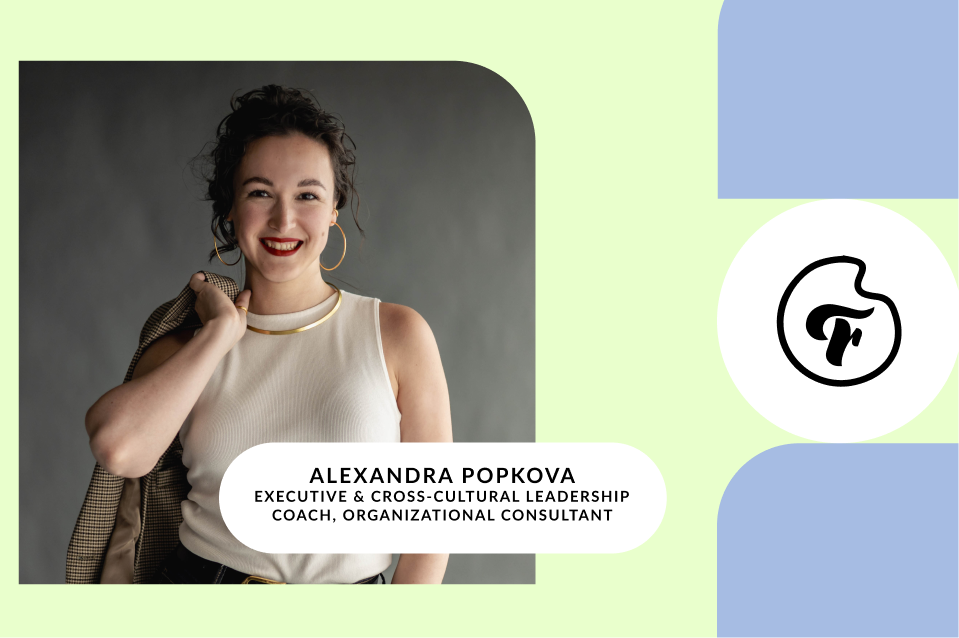
You move abroad. You are prepared, capable, and ready to make it work. And then something keeps feeling slightly off. The yes that does not actually mean yes. The meeting that felt fine until it did not. The colleague who seemed aligned but clearly was not. The moment you realize that everything you thought was professional, respectful, and clear does not translate the way you expected. Working across cultures is not just about adjusting to a new country. It is about realizing that your version of normal was never universal to begin with. This article breaks down the five moments where that hits hardest, and what to do about each one.
Benefiting both individuals and organisations, ERGs provide a sense of belonging to underrepresented employees, help companies recruit top talent, improve employee retention, and potentially attract investors. Our DEI Palette Club recently organised a panel discussion on getting ERGs Right with Christine Engel, Ekaterina Syromyatnikova, and Irina Veligan. During the discussion, many insightful tips were shared on how to start an ERG in your organisation, what to do when your company does not have a system and/or a budget for ERG initiatives, and what activities you can do as an ERG.
The topic of 2023’s International Women’s Day is #EmbraceEquity. The aim of this year’s theme is to make it clear that equity isn’t a nice-to-have, it’s a must-have. In this International Women’s Day blog post, we asked four women from the Femme Palette community to share what equity means to them and how they practice embracing it.
Employee resource groups (ERGs) are a great way to raise awareness about women’s issues in the workplace and ensure a greater level of inclusion, as well as equal access to growth opportunities. Are you thinking of starting a women’s ERG in your company? Or are you already part of one and feeling a bit stuck? Here’s some advice from Femme Palette on how to build a successful women’s employee resource group.
Statistics show that organizations should and must do more to create an inclusive workplace environment for their LGBTQ+ employees. So what can organizations do? Let's look at the areas where companies can improve.
When people feel like they can come to work and feel comfortable and confident to be themselves and valued, they collaborate easier, speak up more, and go the extra mile. Building an inclusive workplace means ensuring that this is possible for everyone. Let’s take a look at which actions you can take to make your workplace more inclusive for LGBTQ+ team members.
Building a sense of belonging is a necessary step in achieving inclusion in the workplace. The goal is for employees to feel truly comfortable and like they can be their true selves in the organization. If we feel that we belong somewhere, we become more productive and innovative. But how can organizations build this sense of belonging? And how should we approach this in virtual teams? We talked about this at one of our latest DEI Palette Club’s events with Alexis Curtis-Harris, Head of Equality, Diversity and Inclusion at Penna, and Rachel Luff, Global Inclusion & Diversity Learning – Strategy Lead at Expedia Group. Here are some of the most important takeaways which the speakers shared on building a sense of belonging.
Diversity and Inclusion programs have become quite a topic over the past decade. There are plenty of E/BRG programs (Employee / Business Resource Group), and managers along with stakeholders are listening more than ever to all the topics in this matter. Yet, it would be a lonely call if all the hard work would be up to the members of such groups. This path would not be the same without the brave and important part of the community, allies.
Have you ever heard of unconscious bias? It’s a term that lies at the heart of conversations about inclusive workplaces. Understanding and confronting the unconscious biases we carry in our minds is something we should all do to develop more understanding and mutual respect in teams. Keep reading to learn more about some common examples of unconscious bias and some simple steps you can make in everyday work life to start confronting them.





.png)
.png)


