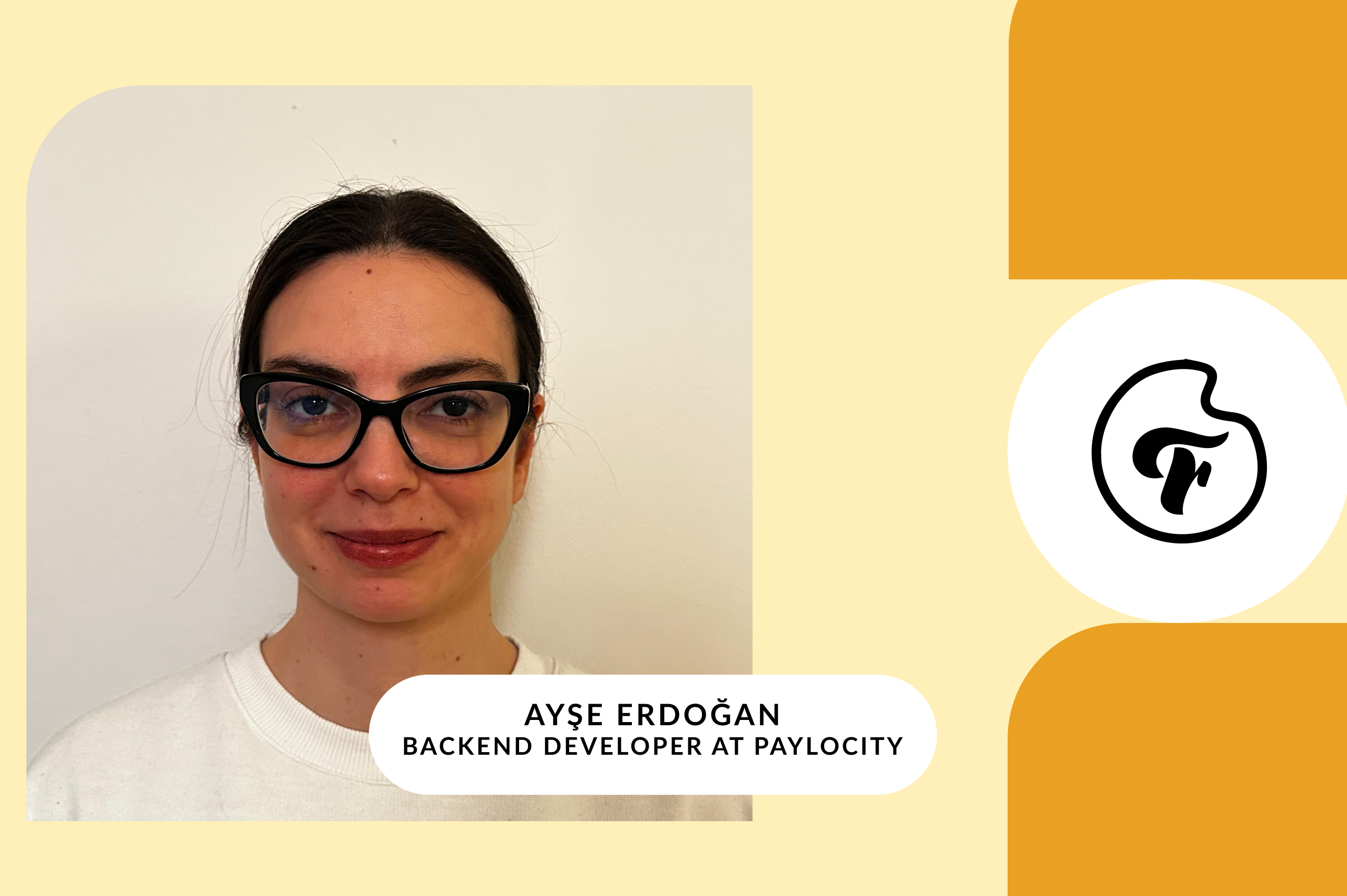
Ayşe Erdoğan, a .NET backend developer at Paylocity, shares her journey from Turkey to the Czech Republic, reflecting on gender bias in engineering, the power of inclusive company cultures, and why visibility, mentorship, and initiatives like Femme Palette are essential to empowering more women in tech.
My first encounter with technology occurred in middle school when the CD player, which my brother and I shared, broke down. The display on the CD player was malfunctioning—though I cannot recall the exact details now—but my brother and I attempted to repair it, yet we were unsuccessful. From that day onward, a curiosity about technology was sparked within me.
Later, when the first computer was brought into our home, I realized that I wanted to pursue a career where I could establish a better connection with computers. Subsequently, I was accepted into the Department of Electronics and Communication at university and also began a minor in Computer Engineering. However, I was unable to continue with the minor at that time.
After graduation, I began my Master's in Software Engineering and started my first job as a Software Developer. This marked the official beginning of my journey in the field of software development.
During my time working in Türkiye, it was quite common for the technology stack we used to change frequently, regardless of individual expertise, due to evolving requests and shifting project requirements. Although I was hired as a .NET backend developer, the technologies we worked with could change once a project ended or priorities shifted. For example, I remember finding myself developing backend services in Python at one point and working briefly on a side project using Node.js. The reality is that trends in our industry change very rapidly.
The greatest advantage of working in such an environment was gaining the ability to adapt quickly to different contexts and requirements after a short adjustment period. However, this also had its disadvantages, particularly in terms of developing deep expertise in a specific area.
In the companies I interviewed with and worked for in the Czech Republic, I did not encounter this kind of frequent context switching. I would say this has been the biggest difference I have observed.
Additionally, in Türkiye, there is a common perception that seniority should strictly increase with years of experience, and it is quite rare to see someone from a non-technical background switching careers later in life and entering the software field. However, in the Czech Republic, I have seen many examples of this. It is inspiring to see people from all kinds of backgrounds, regardless of age or other factors, learn and pursue a career in this area.
I work as a .NET backend developer within the Data Engineering domain, focusing on internal applications where we migrate legacy data to a newly built data platform on AWS using an event-driven strategy. In addition to working with modern technologies—something I genuinely enjoy—I should also emphasize that at Paylocity I collaborate with highly experienced and open-minded engineers.
Culturally, everyone’s perspectives and experience are valued and taken into consideration. We are encouraged to try new approaches, and all forms of innovation are supported and welcomed. We consistently work with up-to-date technologies and strive to keep ourselves current. This is one of the aspects that makes my work particularly enjoyable.
Paylocity truly values diversity. The company ensures an equal approach to all employees, regardless of gender, ethnic identity, or any other demographic distinction. There is a common belief in the industry that a pay gap exists between men and women, but since joining Paylocity, I can confidently say that this bias has been shattered for me. Everything I do is visible and recognized, regardless of gender, and this is the case for everyone here.
This inclusive culture doesn’t just benefit women; it uplifts everyone on the team, creating a more collaborative, innovative, and supportive atmosphere. Knowing that my work is valued for its merit and not influenced by any gender biases makes me more excited to take on new challenges and deliver quality results.
The tech sector has traditionally been male-dominated, and this can sometimes lead to women feeling like they don’t belong or that their voices aren’t as visible. However, I don’t believe women are in the minority in tech; rather, the challenge is that our contributions haven’t been as prominently recognized.
Supporting initiatives like Femme Palette is crucial because they help change this dynamic. By partnering with organizations that support women in tech, we create opportunities for visibility, networking, and mentorship, which are all essential for encouraging more women to thrive in the industry.
These events also provide a platform for women to share their experiences, learn from one another, and support each other in navigating the challenges we face. The more we amplify women’s voices and achievements, the more we can break down barriers and build a culture where women are seen as equal contributors.
This partnership is invaluable because it’s not just about individual growth; it’s about collectively shifting the narrative around women in tech and showing that diversity isn’t just a buzzword—it’s a driving force for innovation and success.
While the tech industry has made significant strides, women are still underrepresented in backend development roles, and this can create several challenges. One of the biggest hurdles is unconscious bias, both in hiring processes and in day-to-day work, where women may be less likely to be mentored or promoted to leadership positions. Additionally, there's often an assumption that women are more suited for roles in front-end development or testing, which can limit opportunities for those interested in backend engineering.For example, when I moved from Turkey to the Czech Republic, I noticed a certain level of surprise when I mentioned that I specialize in backend development. This highlights the ongoing underrepresentation of women in these technical areas. However, I believe that these biases are gradually being broken down, especially as companies like Paylocity actively prioritize diversity and inclusion.
To help overcome these challenges, companies can take several concrete steps. First, they can implement mentorship and sponsorship programs that pair women with experienced leaders in the backend development field, helping to bridge the gender gap in technical leadership. Additionally, promoting unconscious bias training for hiring managers and creating clear pathways for career advancement can ensure that women in backend roles are evaluated fairly and given equal opportunities for growth.
Moreover, fostering a culture of inclusivity where women feel supported, whether through flexible work options, leadership training, or active participation in industry events, can make a big difference. By continually investing in these efforts, companies can not only break down biases but also help women excel and thrive in backend development roles, creating a more balanced and innovative workforce in the long term.
Throughout my career, I have had the opportunity to work with many talented and experienced engineers. I have always tried to learn something from everyone’s perspectives, and where appropriate, from their critiques and feedback.
The leadership models that have left the most lasting impression on me are those of engineers who communicate openly, are empathetic, and take pleasure in sharing their knowledge. The senior engineers in my current team are a great example of this, and I can confidently say that I look up to them as role models.
I My biggest piece of advice would be to dive in with confidence if you’re truly passionate or curious about backend development. The challenges you’ll face along the way will be tough at times, but you’ll quickly discover how rewarding and enjoyable the process can be. It's normal to feel like you're not getting it at first, but persistence is key. The more you push through, the more you’ll realize how capable you are, and that’s a huge confidence booster.
I also highly recommend surrounding yourself with a supportive community. Whether that’s seeking mentorship from more experienced developers or joining online groups and meetups, there are so many opportunities to learn from others. These networks can help you overcome obstacles, share advice, and provide moral support when things get challenging. Additionally, don’t underestimate the power of peer learning, sometimes your fellow newbies can offer fresh perspectives that are just as valuable as advice from veterans.
Finally, remember that this journey is a continuous learning process. The tech industry evolves rapidly, and there’s always something new to explore. Embrace that fact, and try to enjoy the learning curve. You’ll find that the most satisfying part of backend development isn’t just solving problems, but continually growing and adapting to new technologies. And, don’t forget—everyone starts somewhere, and the feelings of doubt or imposter syndrome are normal. Push through them, trust your abilities, and know that you belong in this field just as much as anyone else.