In 2015, Apify was a handful of friends in one room in Prague, doing IT consulting. Today it employs more than 200 people from 36 countries and runs the largest marketplace of tools for AI. The office is bigger and the product has changed. The way people work there mostly hasn't: everyone picks where and when they work, and plenty of them stay after hours for board games and a beer.
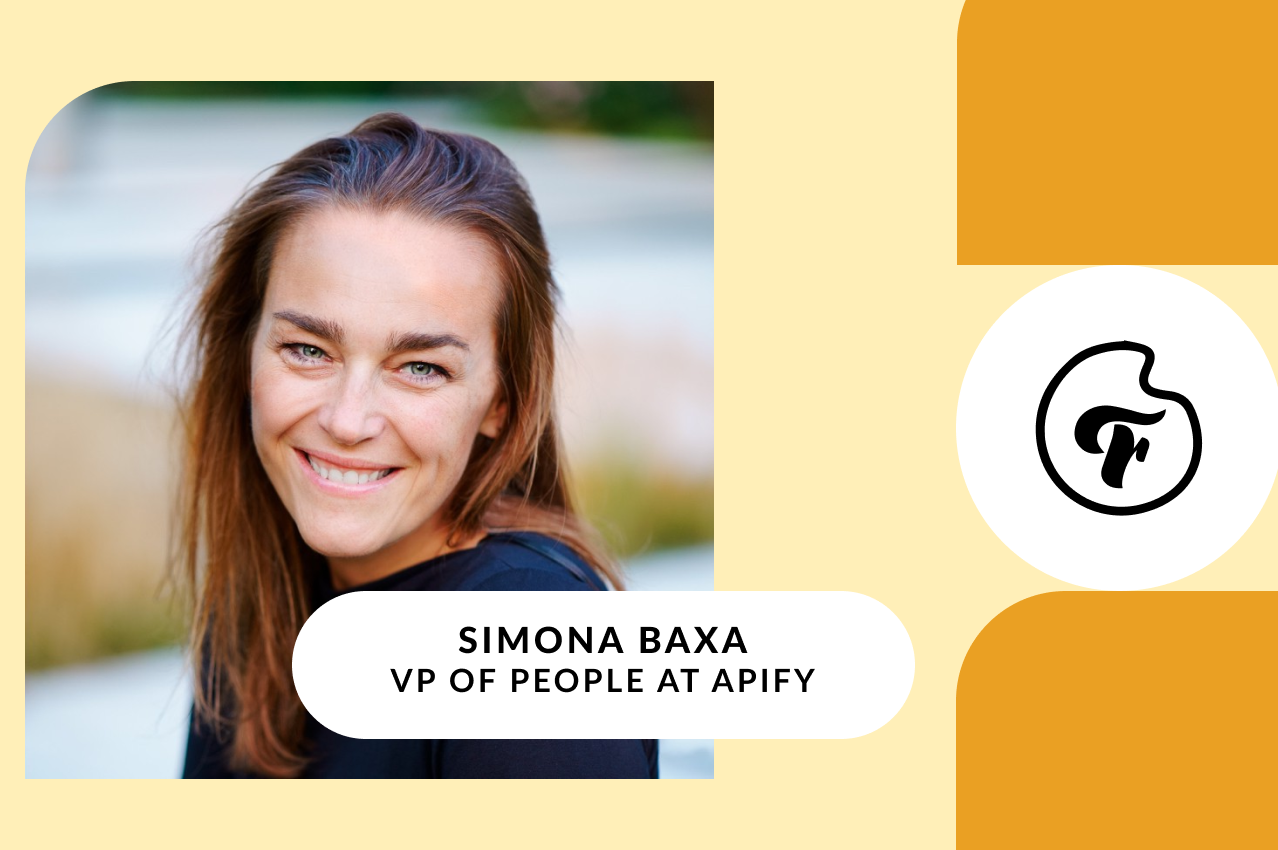
We talked to Simona, VP of People, about hiring for curiosity instead of credentials, what AI is doing to the word "technical," and how a financial controller of eight years became a frontend engineer at Apify.
Our founders, Jan (Honza to everyone at Apify) and Jakub, have been friends since their studies at Charles University's Faculty of Mathematics and Physics (Matfyz) and originally started a small IT consulting firm in 2015. Together, they gradually built it into the global company Apify is today. We've grown tremendously since then, evolving from a handful of Czech enthusiasts into an international team. Yet Apify's company culture remains rooted in the exact same foundations as in the very beginning. We base everything on absolute freedom, trust, and flexibility.
Even with a much bigger team, people choose where and when they work. Some prefer the peace of their own home, others like working while traveling, and a good chunk of the crew comes into our offices in the historical center of Prague regularly. Even as we've expanded globally, we've held onto the friendly, relaxed atmosphere of our early years. People here actually like being around each other, so a lot of us hang out at the office. Good coffee and free snacks don't hurt. After work, we often stick around to play board games, fire up the PlayStation, or head out together for a beer.
Some of our OG colleagues, the ones who remember what it felt like when Apify was just 20 people and are still with us today, often say that even though we've grown so fast, we've managed to hold onto the startup vibe, the friendly and supportive atmosphere, and the trust that came with it. A lot of that was built and is still lived by our founders. Apify's CEO, Jan, often says that we're building a company we'd want to work for, and that still holds true today. We live our values and act on them every day. That's what makes Apify unique.
The tech industry would benefit from more diversity, and we've always tried to show that IT has room for everyone. Our partnership with Czechitas plays a big part in that. They focus mainly on women and help them break into the industry through dedicated courses, retraining programs, and community events, and we love being part of that.
AI is moving fast right now, and it's opening up software development way beyond just deep technical expertise. That's a huge door swinging open for fresh talent, and we're excited about it. When we're looking for new team members, we try to keep a completely open mind, actively work against bias, and welcome people from all kinds of backgrounds and paths. What matters most to us is the right mindset and real enthusiasm, way more than a perfect resume.
We've long since outgrown our early focus on web scraping and are building the single largest marketplace of tools for AI. That means everyone works with AI daily and keeps up with the latest tools, not just the people writing code.
What everyone here shares is a real interest in AI. You don't need a computer science degree to thrive here. When people see that our doors are open through marketing, community, or people operations, the notion that AI is strictly "niche and technical" quickly fades away. Whether you're in a tech or non-tech role, the goal is the same: finding ways to use AI to simplify your workload, establish new workflows, and carve out space for higher-level thinking.
Our People Partners are a good example. They lean on Claude every day for the routine stuff, scheduling, booking meetings, running research, and analysis. That gives them back time for the conversations that actually need a human, with the team and with the business, which is the part AI can't do. And it's not just them. Everyone here works this way, and it's a big reason we keep growing so fast.
And it's not only about non-tech roles. Some people cross into tech here from completely different careers. Take Kačka. She spent eight years in financial controlling before she decided to learn to code, and now she's a frontend engineer here and loving it. Her finance background didn't go to waste, either. She's the one who can talk to both the finance and engineering teams when their systems need to work together. Turns out a non-traditional background can be a real advantage.
Mutual respect is the cornerstone of everything we do. Also, what ties everyone together and acts as a kind of lighthouse are Apify's company values. They connect people with different perspectives and different locations. We have 36 different nationalities on the team, with 62% being Czech and Slovak and 38% coming from other parts of the world.
On top of that, we don't have strict rules about being in the office, and plenty of Apifiers are spread around the world. But the offices still matter for bringing people together. It's where we hang out, get to know each other, and build the kind of relationships that last. That's why company-wide teambuildings and offsites are such a big deal. They're the glue.
It shifts what "technical" even means. We're looking less for people who can only do one narrow thing well, and more for people who are curious, adaptable, and comfortable with the fact that the tools and best practices they learned six months ago might already be out of date. We want people who use AI to get more done, who spot where it could make their work better, who enjoy building it into how they work, and who share what they figure out with everyone else. That applies across the company, not just engineering. Our Operations, People, and Talent Acquisition teams are also deep in rebuilding their day-to-day work and redefining what normal looks like now.
What hasn't changed is what we screen for underneath the skills: ownership, team spirit, a low-ego profile, and the same values.
Apify invests in the learning environment itself and gives people access to a range of AI tools, with Claude as the number one tool, used by the majority of Apifiers. Everyone gets an unlimited subscription, so no one has to count tokens. On top of that, we want to help people actually build fluency with these tools, not just have access to them. We have an internal team dedicated to accelerating people's skillsets, we run AI office hours where people can get help building new agents and workflows, and we support team learning through hackathons and workshops.
A lot of them. To keep up with our revenue targets and business ambition, we've been growing the team by 50% year on year. We've hired a lot of new colleagues into engineering, and we're still on the lookout for backend engineers, but we've also been hiring massively into marketing, where we've built out product marketing and performance marketing teams from scratch, built a developer community function, and significantly expanded our customer-facing roles.
We continue hiring into all core departments such as engineering, product, and marketing. See all open roles here.
Being part of the Apify journey is definitely something special. This growth phase, building a marketplace of tools for AI in the middle of the massive AI hype, is a ride. It's exciting for people who are willing to learn every day and open to new ways of working. Apify offers a culture of continuous development, with a variety of workshops, hackathons, and lunch and learn sessions, and a learning day per month for everyone. That goes hand in hand with open feedback, clear and direct conversations with team leaders, and defining the right growth pathway for each and every one of us.
Prague is where we are rooted and where we are committed to building for the long term. We host and support dozens of events to bring the local developer and tech community together, and we support the ecosystem further through close partnerships with technical universities like the Czech Technical University (CTU) and Matfyz. We've also grown our physical footprint here significantly, including our new office at 100Yards Prague.
That local presence shapes hiring, too. We can offer people in Prague and Brno the chance to work on a global platform without ever having to leave the city where they're building a life. For a lot of talented people, that combination of global ambition and local roots is exactly what makes Apify an easy yes.
I'd want them to know that Apify is still very much in its growth phase, and that's exactly what makes it exciting. You're joining something you can genuinely help shape, whether that's in engineering, marketing, People, or any other part of the company.
I'd also want them to know that the culture here isn't an accident. It's something our founders built intentionally from day one, and something we keep protecting as we grow: open, honest feedback, real trust between people, and a team that still feels like a team, even now that we're more than 200 Apifiers across Prague, Brno, and abroad. We take our values seriously and live them day to day.
And finally, I'd want them to know that people grow here alongside the business. We invest heavily in that through a clear career ladder, real feedback, and a genuine culture of learning. If you're someone who's curious, who cares about doing good work, and who wants to build something alongside people who feel the same way, Apify is a place where that will be seen and supported.
That's why I truly enjoy working at Apify. It makes me proud. If you're interested in hearing more, ping me on LinkedIn.